Brass, stainless steel, aluminum, glass, acrylic — which material belongs where, and what to avoid in each hotel area.
Hotel lighting materials don’t fail because they’re poor quality. They fail because they’re specified for the wrong environment.
A factory-patina brass chandelier that develops a beautiful surface in a climate-controlled lobby will corrode in a pool area within two years. Mirror-polished stainless steel that photographs well in a showroom becomes a fingerprint problem in a guest corridor within hours of cleaning.
The variables that change zone by zone — humidity level, touch frequency, cleaning chemicals, airborne grease, UV exposure — should drive every material decision. This guide breaks down what works, what doesn’t, and why.
Lobby & Reception
Visual impact · Brand identity · Long-term stability
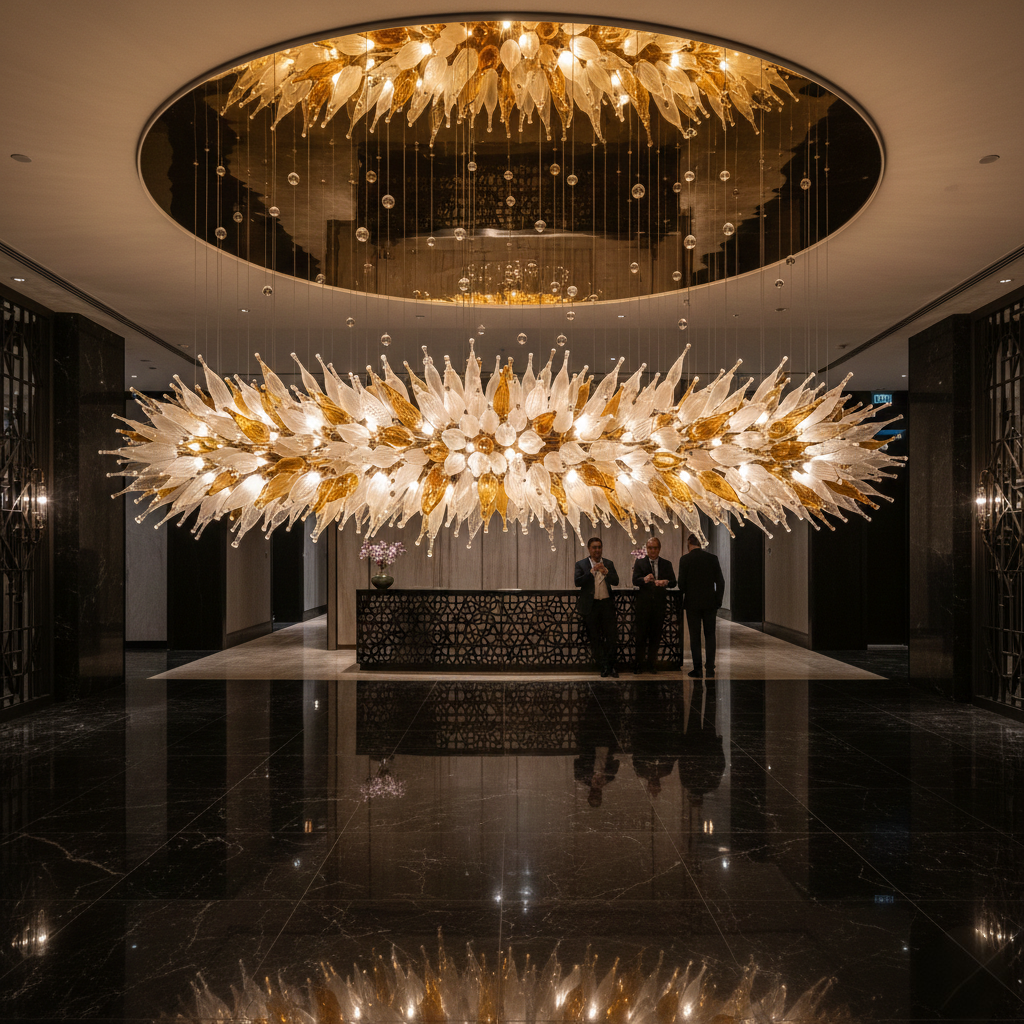
Brass is the top choice for luxury-positioned properties. Factory-applied patina finishes eliminate the unpredictable oxidation phase and deliver a stable, rich surface from day one.
Stainless Steel + Glass suits contemporary design — use brushed or PVD-coated finishes only. For large-scale chandeliers, Aluminum internal frameworks reduce ceiling loading while brass or glass serves as the visible material.
Recommended
- Patina-finished brass (luxury)
- Brushed SS + glass (contemporary)
- Aluminum frame + brass/glass skin
Avoid
- Acrylic — reads budget, yellows over time
- Mirror-polished SS below 3 m
Guest Rooms
Warmth · Low maintenance · Safety
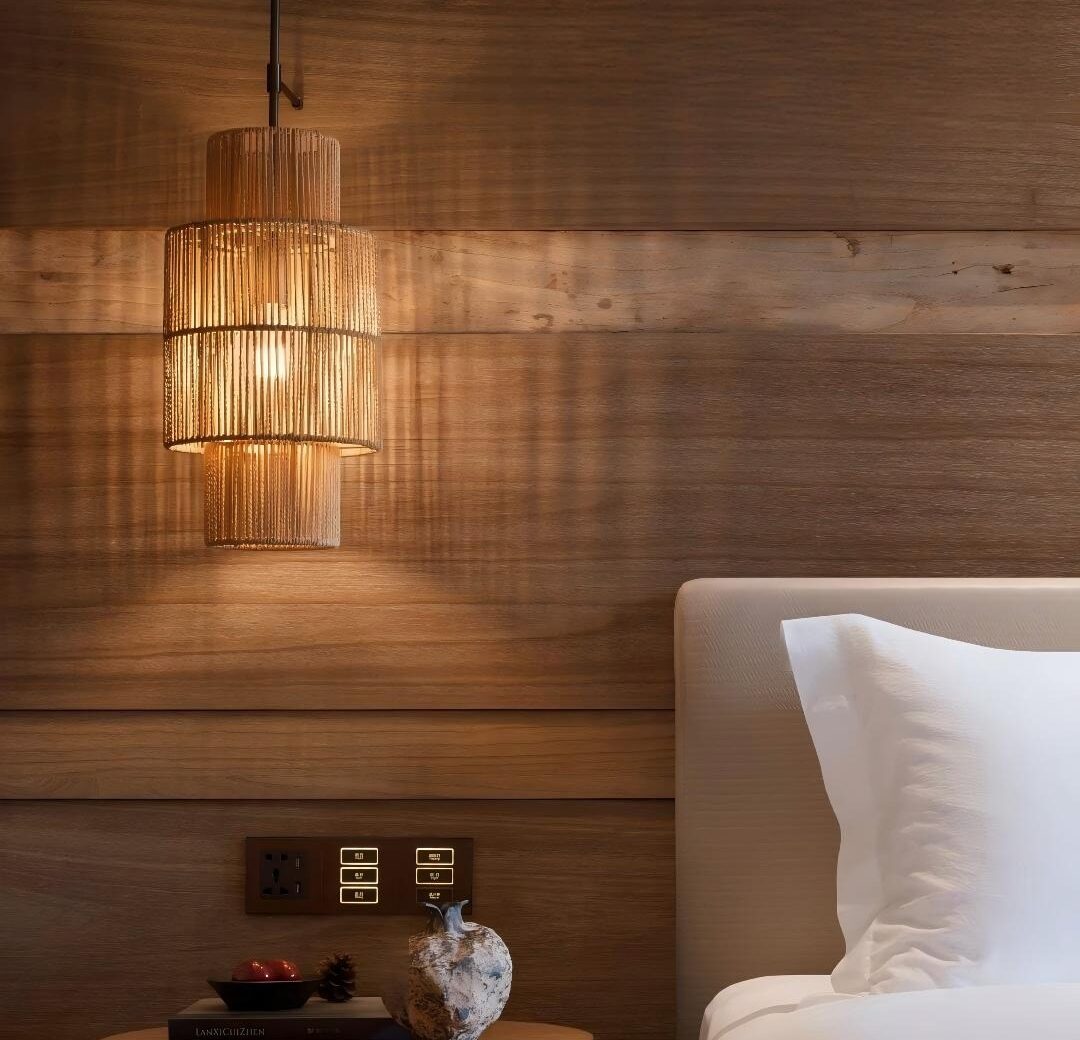
Bedside fixtures: Brass for luxury tier, Brushed SS for contemporary, or iron + fabric shade for residential warmth. Reading lamps need a metal body paired with frosted glass or dense fabric shades to prevent glare at pillow level.
Bathroom lighting is the highest-risk specification in guest rooms. Standard 304 stainless and untreated brass will deteriorate even in bathrooms with wet/dry separation.
Recommended
- Brass / brushed SS / iron + fabric
- Frosted glass shades for reading lamps
- 316 SS or sealed brass in bathrooms
Avoid
- Untreated brass in any bathroom
- Sharp-edge glass at bed height
- Acrylic in upper-tier properties
Restaurants & Dining
Dining atmosphere · Grease resistance · Easy cleaning
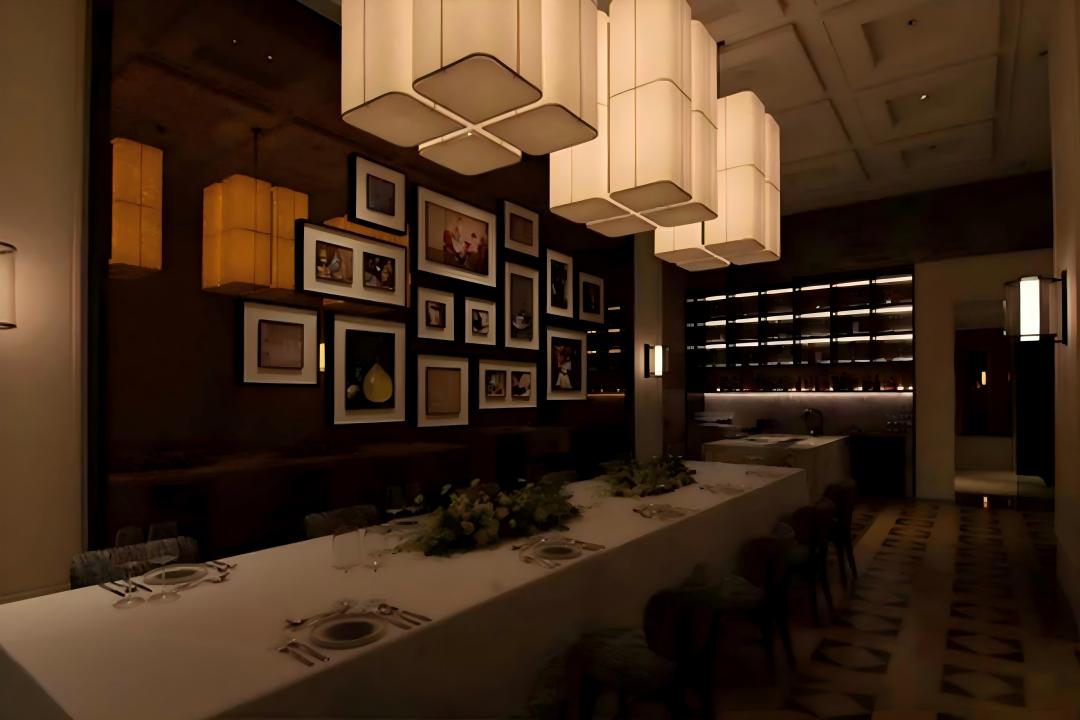
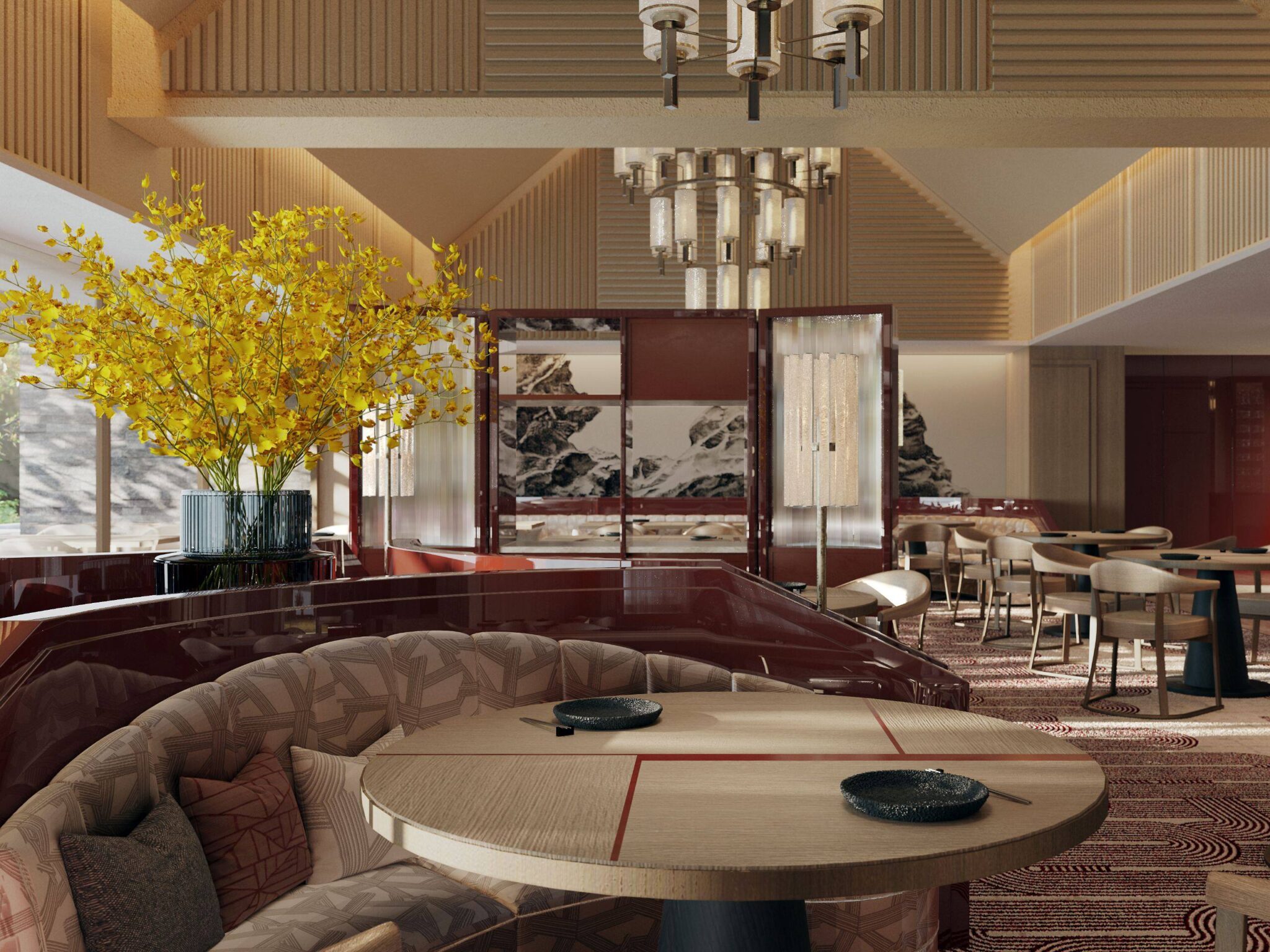
Stainless steel wins on practicality — smooth surfaces wipe clean during daily maintenance. Enclosed glass shades serve double duty: diffusing light for ambiance while blocking airborne grease from reaching internal components.
For wall and accent fixtures, smooth-profile metals only. Any textured, hammered, or filigree surface traps grease and dust, creating cleaning burdens that compound month over month.
Recommended
- Smooth-finish stainless steel
- Enclosed glass shades
- Sealed fixture designs near kitchens
Avoid
- Brass near open kitchens
- Textured / hammered surfaces
Corridors & Elevator Lobbies
Wayfinding · High-traffic durability · Minimal cleaning
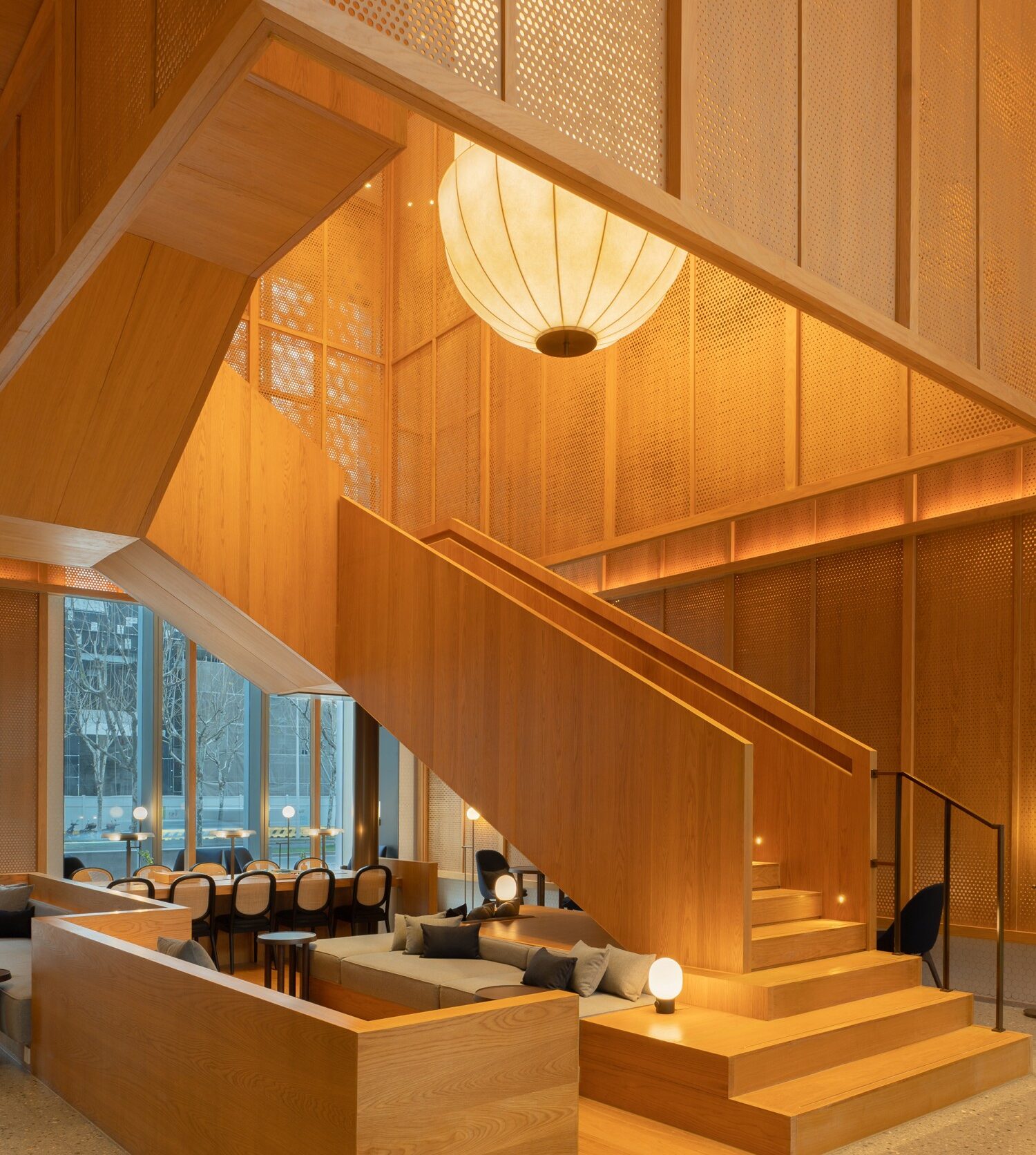
Brushed or sandblasted SS is the default — these finishes mask fingerprints and minor scuffs without requiring daily attention.
For warmer tone requirements, PVD-coated stainless in champagne gold delivers the visual warmth of brass with the maintenance profile of stainless steel.
Recommended
- Brushed / sandblasted stainless steel
- PVD champagne gold SS (warm tone)
Avoid
- Mirror-finish metals of any kind
- Polished brass (oxidation at eye level)
- Aluminum at hand height (dents easily)
Pool, Spa & Wellness
Corrosion resistance · Moisture sealing · Safety compliance
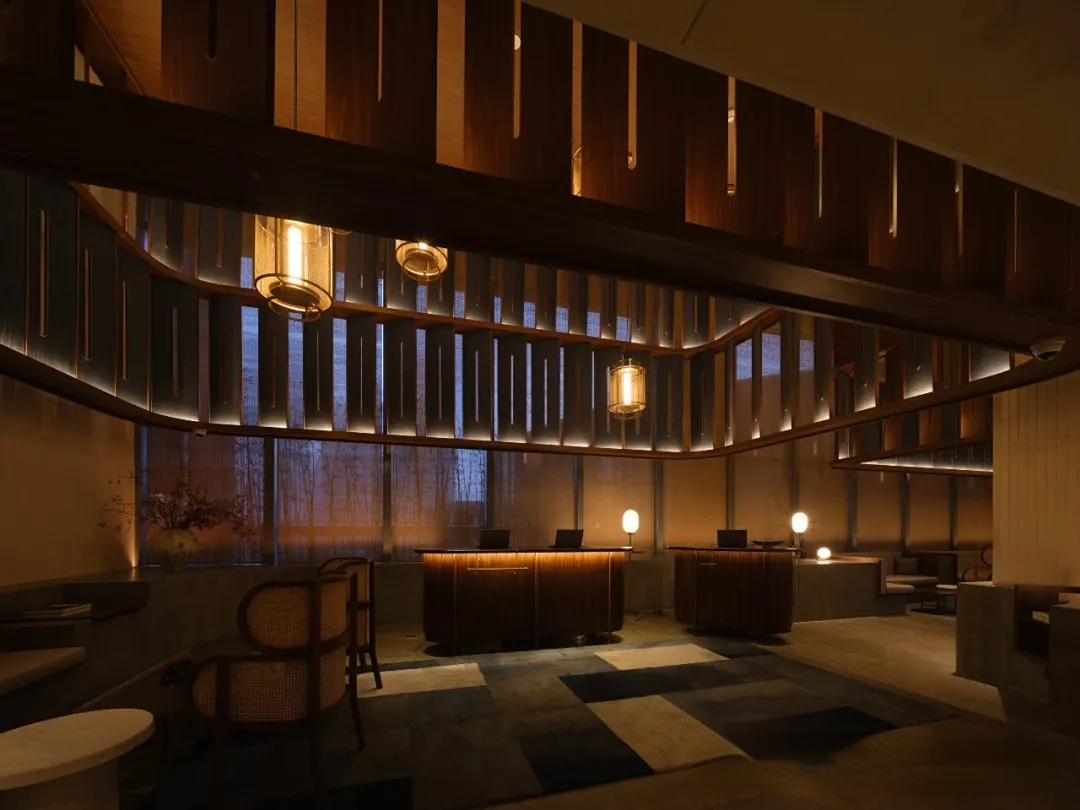
The most demanding zone. Only 316 SS and sealed glass meet the performance threshold for pool-adjacent environments with chlorinated air, steam, and sustained high humidity.
Spa treatment rooms can use stone or wood as the visible fixture body, with fully sealed internal LED modules. Minimize exposed metal — even 316 stainless shows accelerated wear under constant steam.
Recommended
- 316 stainless steel + sealed glass
- IP65 minimum rating
- Stone/wood body for spa rooms
Avoid
- 304 stainless steel (pitting risk)
- Any unsealed brass or copper
- Acrylic (chlorine accelerates yellowing)
Quick Reference
Zone
First Choice
Alternative
Avoid
Lobby
Patina brass
Brushed SS + glass
Patina brass
Guest Room
Brass · Brushed SS
Iron + fabric
Untreated brass in bath
Restaurant
Smooth SS
Enclosed glass
Textured brass near kitchen
Corridor
Brushed SS
PVD champagne gold SS
Mirror finish · Polished brass
Pool / Spa
316 SS + sealed glass
Stone / wood body
304 SS · Unsealed brass · Acrylic
Get the Material Right Before Production
We support zone-based material specification with samples, accelerated aging test data, and configuration guidance — before a single fixture is manufactured.
Material samples· Aging test reports·Zone configurations